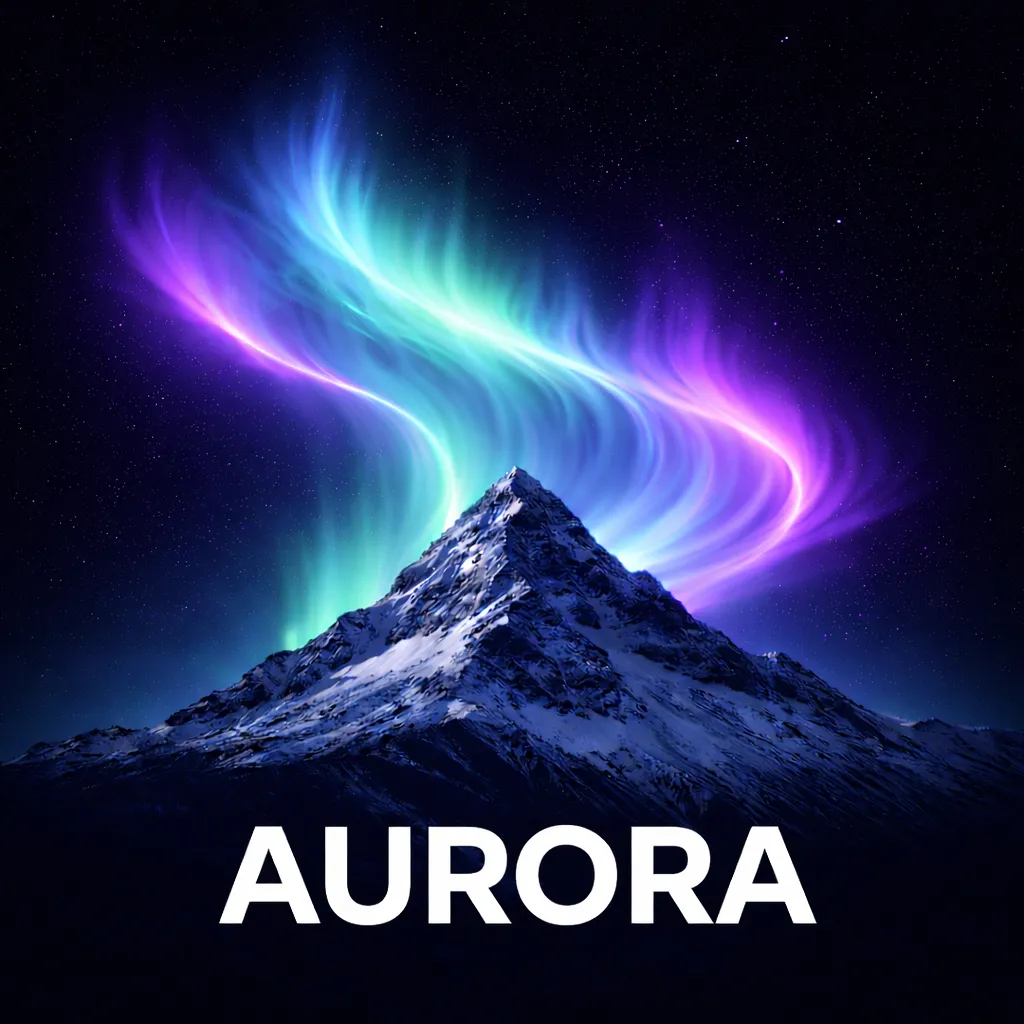
Slovakia is not a normal northern lights destination. It is a rare-event, severe-storm market where the aurora may appear only during major geomagnetic disturbances, often as a red glow or faint camera structure low on the northern horizon. That does not make Slovakia irrelevant to aurora hunters; it makes the forecast discipline stricter. If a G4 or G5 storm is underway, a dark Slovak ridge, national park or open northern viewpoint can record a remarkable low-latitude display. This guide explains what must be true before you go out: the Kp and Bz thresholds, why red aurora is more likely than green curtains, which Slovak landscapes give a clean north view, and how to avoid mistaking city glow or cloud color for a real storm.
How We Reviewed This Guide
- This guide specifically addresses the mid-latitude geomagnetic reality of Slovakia (48°N - 49°N).
- We prioritize realistic expectations: naked-eye visibility is exceptionally rare and requires historic solar storms.
- Location recommendations are based on verified Bortle class dark sky areas and elevation advantages.
Primary Sources
- Space Weather Prediction Center — Official global geomagnetic forecasts.
Editorial Note
Aurora Hunt is our own product, designed to help you track complex space weather. Any mentions are provided as a helpful recommendation rather than an impartial review.
Local decision check before you chase
Treat every aurora guide as a decision workflow, not as a promise that the lights will appear. Start with the geomagnetic signal, then check whether the active window overlaps true darkness, then decide if cloud cover, moonlight, terrain and safety make the trip worthwhile from your exact location.
For high-latitude destinations a modest Kp can be useful when the sky is dark and clear. For mid-latitude and low-latitude markets, the same number can be meaningless unless Bz stays southward, the storm arrives during local night and the northern or southern horizon is unobstructed. This is why Aurora Hunt pages separate routine aurora regions, rare storm-visible regions and southern-light locations.
After any observation, compare the time, viewing direction, camera settings and local weather with magnetometer and solar-wind data. That habit prevents common false positives: city glow, thin cloud, airglow, lens colour shifts and social-media reports that were recorded hundreds of kilometres away.
- Kp and short-term trend
- Bz direction and solar-wind speed
- Cloud cover and moonlight
- Open horizon and dark-sky safety
Can Slovakia See the Aurora?
Yes, but the word "can" needs context. Slovakia sits around 48-49 degrees North geographically and at a magnetic latitude far below the normal auroral oval. Ordinary Scandinavian aurora activity does not reach the Slovak sky. A traveller should not book a Slovakia trip for northern lights in the way they might book Tromsø, Abisko or Finnish Lapland. Instead, Slovakia becomes relevant only when a large solar eruption interacts strongly with Earth and pushes auroral emissions far south.
When that happens, Slovakia can record red aurora, faint pillars and occasionally broader sky color, especially from dark rural areas with an open north view. The display may be obvious in long-exposure photos while still subtle to the eye. Reports from Central Europe during major storms are real, but they are episodic. The right mental model is not "where should I go tonight for aurora?" It is "a historic storm is underway; where in Slovakia can I safely document the northern horizon?"
Kp 8-9 and G4-G5 Storm Rules
For Slovakia, a weak or moderate alert is noise. Kp 5 is not enough. Kp 6 may be interesting scientifically but is unlikely to produce a useful visual display. Kp 7 can sometimes place a faint red photographic glow on the northern horizon if Bz is strongly southward and the sky is dark, but most observers should wait for Kp 8-9 language or a NOAA G4-G5 storm before committing to a serious chase. Even then, local conditions must cooperate.
Read the live storm, not just the forecast headline. A strong CME impact may arrive with a shock, then fade if Bz turns north. The useful window comes when Bz stays negative, solar wind speed remains elevated, and reports from Poland, Czechia, Hungary or Austria confirm the oval has expanded. If northern Central Europe is already recording red rays and Slovakia has clear skies, it is time to move. If social media is excited but live data is quiet, stay skeptical.
- Kp 7 / strong G3: Treat as a camera-only possibility from a very dark northern horizon, not a promise of visual aurora.
- Kp 8 / G4: The first genuinely chase-worthy tier for Slovakia, especially with sustained negative Bz and clear rural sky.
- Kp 9 / G5: The rare tier where naked-eye red glow or pillars become plausible, though still dependent on clouds, moonlight and horizon.
Because the aurora will be occurring hundreds of miles to your north over Poland and the Baltic Sea, it will appear very low on the horizon. If you have mountains, tall trees, or a glowing city blocking your view to the north, you will miss the display entirely.
Why Slovakia Usually Sees Red Aurora
If Slovakia sees aurora, it is usually red or magenta rather than the bright green curtains familiar from Arctic marketing. The reason is geometry. Green oxygen emissions commonly occur around 100-150 km altitude and may remain below the northern horizon from Central Europe. Higher red oxygen emissions, around roughly 200-400 km altitude, can be visible over Earth's curvature during large storms. That is why Slovak photos from major events often show a red band or vertical red pillars rather than a green overhead arc.
This color expectation is important for setting honest reader expectations: describing Slovakia as a place for routine green northern lights over the Tatras would be misleading. A realistic guide should prepare readers for faint red structures, camera-assisted detection and short windows. If a display becomes visibly dynamic, that is a major storm result, not the baseline.
Best Slovak Dark-Sky Locations
Light pollution is the biggest local enemy. Bratislava, Košice, Prešov, Žilina and other urban areas can hide a low red glow even during a strong storm. You need darkness, elevation when useful, and a clean line of sight north. Mountain locations are attractive because they can lift you above haze, but they are not automatically better if the northern horizon is blocked by terrain. A lower open field facing north can beat a famous summit looking into cloud or city glow.
The darkest place in Slovakia. Located in the far east, the Poloniny Dark-Sky Park offers incredibly pristine night skies with virtually zero light pollution.
High altitude locations like Lomnický štít or Strbske Pleso provide elevation above low-level clouds and smog, offering a clear view to the northern horizon.
Chopok and other elevated peaks offer panoramic views. Look north across the valleys towards the Polish border.
A secluded national park with minimal artificial light, excellent for long-exposure photography of rare auroral events.
Poloniny is the strongest pure dark-sky candidate. The High Tatras and Low Tatras offer elevation and landscape, but access, weather and horizon shape matter. Muráň Plateau and other rural protected areas can work when they provide a simple northern view without urban light domes. Scout locations in daylight if possible. During a rare storm, you do not want to discover that your chosen viewpoint faces a forest wall or a ridge.
Northern Horizon and Weather Filters
For Slovakia, the northern horizon is not a nice-to-have; it is the observation itself. The aurora will likely sit low over Poland and northern Europe. If the north is blocked by mountains, trees, buildings or haze, the display may be hidden completely. Choose a place where you can point a camera due north and include at least a few degrees of clean sky above the horizon. The farther south you are in Slovakia, the stricter this rule becomes.
Weather can be deceptive. Thin cloud may glow red from towns and imitate aurora in a long exposure. Haze can scatter city light and create a smooth reddish dome that does not change between frames. A real aurora usually shows structure: rays, bands, movement, or a color gradient tied to the northern sky. Compare several photos over ten to twenty minutes and check whether the glow evolves with live geomagnetic data.
Snow cover can complicate the decision. It makes rural roads slower and brighter, but it also reflects weak sky color and can help foregrounds read in a photograph. If snow is present, prioritize simple access and avoid exposed mountain roads unless conditions are clearly safe.
Camera-First Observation Tactics
A camera is essential in Slovakia. Use a tripod, manual focus, wide lens, ISO 1600-3200 and a starting exposure of 10-15 seconds. If the scene is too dark, raise ISO before making very long exposures that turn stars and clouds into blur. Point north, shoot repeated frames, and keep white balance consistent so you can compare changes honestly. A phone in Night Mode can help verify color, but it must be stabilized; handheld frames are not reliable evidence.
Do not overprocess. Pulling saturation until every cloud becomes red creates misleading images and trains readers to expect something the eye cannot see. A useful Slovakia aurora photo should preserve stars, horizon direction and realistic color. Include a foreground only if it does not compromise the northern view. A dark field, ridge or lake with a low red arc can be more honest and more useful than a famous landmark facing the wrong way.
Go/No-Go Checklist for Slovakia
Go only when several conditions line up: Kp 8-9 or strong G4/G5 messaging, sustained negative Bz, clear reports from countries north of Slovakia, dark sky outside cities, no bright moon directly washing the horizon, and a safe location with a clean north view. If one of those fails, the chance drops sharply. If two or more fail, stay home and monitor the next data window. Because the event is rare, the temptation is to chase every alert; the better strategy is to wait for a truly severe storm and then execute calmly.
Also decide what counts as success before leaving. In Slovakia, a credible long-exposure red arc with matching live data is a meaningful result. A faint eye-visible glow is excellent. Clear moving pillars are exceptional. This expectation keeps the chase grounded and prevents the common mistake of dismissing real low-latitude aurora because it does not resemble a Lapland tourism poster.
Use Aurora Hunt for high-threshold alerts only. For Slovakia, a useful alert should mean severe storm potential, not routine Arctic activity.
About the Author
AuroraHunt Space Weather Team
The AuroraHunt data science and meteorology team translates complex NOAA space weather models into actionable forecasts for chasers worldwide.