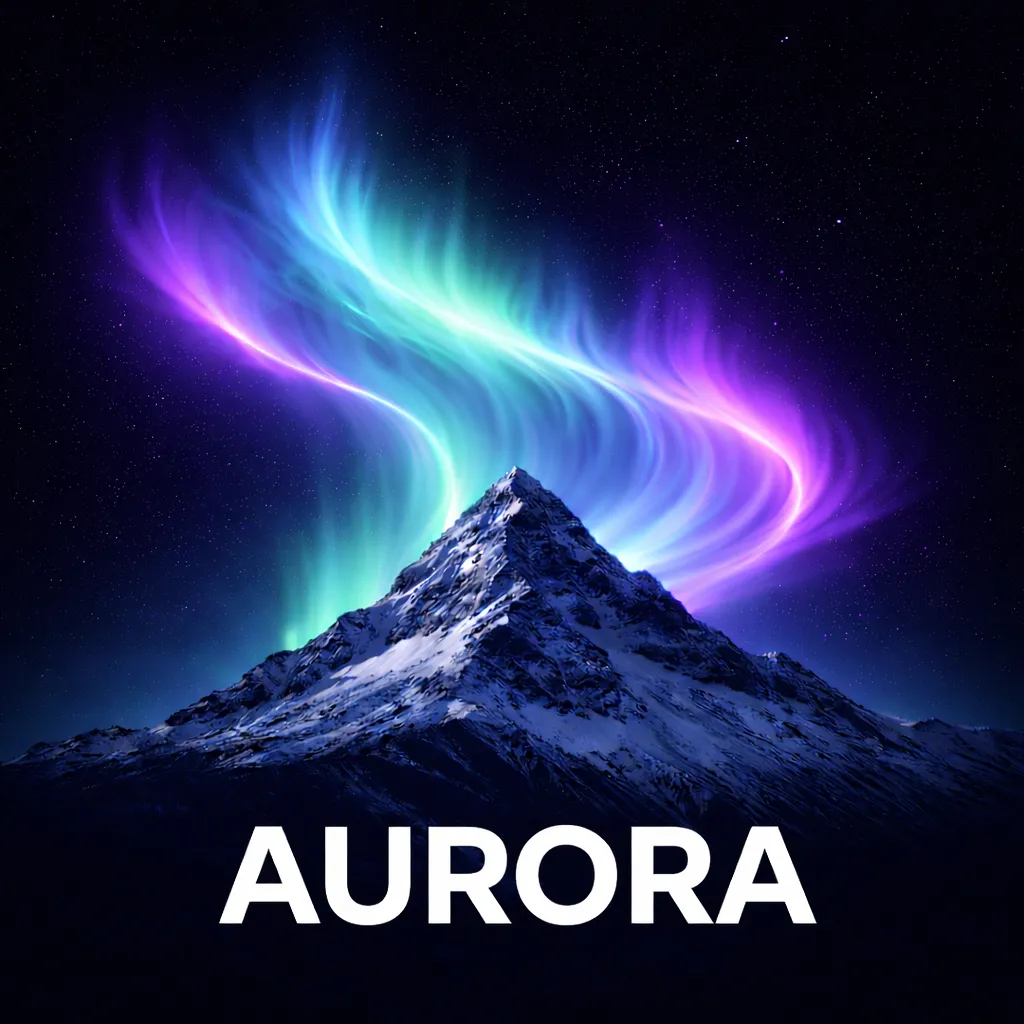
Romania is a deep mid-latitude aurora market: possible during rare severe storms, but not a place where northern lights should be marketed as a normal travel expectation. The most realistic Romanian display is a red or magenta glow low in the northern sky, sometimes captured by camera before the eye notices it. During a G4 or G5 geomagnetic storm, rural Transylvania, Carpathian viewpoints and very dark eastern landscapes can become useful observation sites. The discipline is strict: wait for extreme space weather, leave city light, choose a clean north horizon, and treat the camera as a verification tool. This guide explains how to do that without overclaiming what Romania can deliver.
How We Reviewed This Guide
- This guide specifically addresses the deep mid-latitude reality of Romania (43°N - 48°N).
- We prioritize realistic expectations: naked-eye visibility is exceptionally rare and requires G4 or G5 historic solar storms.
- Location recommendations are based on verified Bortle class dark sky areas and geographic sightlines.
Primary Sources
- Space Weather Prediction Center — Official global geomagnetic forecasts.
Editorial Note
Aurora Hunt is our own product, designed to help you track complex space weather. Any mentions are provided as a helpful recommendation rather than an impartial review.
Local decision check before you chase
Treat every aurora guide as a decision workflow, not as a promise that the lights will appear. Start with the geomagnetic signal, then check whether the active window overlaps true darkness, then decide if cloud cover, moonlight, terrain and safety make the trip worthwhile from your exact location.
For high-latitude destinations a modest Kp can be useful when the sky is dark and clear. For mid-latitude and low-latitude markets, the same number can be meaningless unless Bz stays southward, the storm arrives during local night and the northern or southern horizon is unobstructed. This is why Aurora Hunt pages separate routine aurora regions, rare storm-visible regions and southern-light locations.
After any observation, compare the time, viewing direction, camera settings and local weather with magnetometer and solar-wind data. That habit prevents common false positives: city glow, thin cloud, airglow, lens colour shifts and social-media reports that were recorded hundreds of kilometres away.
- Kp and short-term trend
- Bz direction and solar-wind speed
- Cloud cover and moonlight
- Open horizon and dark-sky safety
Can Romania See the Aurora?
Yes, Romania can see aurora during exceptional geomagnetic storms, but the baseline expectation must be conservative. At Romanian latitudes, the auroral oval usually remains far to the north. Normal aurora activity over Scandinavia, Iceland or northern Canada will not be visible from Bucharest, Cluj-Napoca, Iași or Brașov. Romania becomes relevant when a major CME produces a severe disturbance and the high-altitude red aurora extends far enough south to clear the northern horizon.
That distinction matters for reader trust and safety. A useful Romanian aurora article should not invite readers to "go north tonight" after a minor alert. It should explain that most successful Romanian observations are tied to historic or near-historic storms, often during solar maximum years, and often verified first through cameras and reports across Central/Eastern Europe. If Poland, Hungary, Slovakia and northern Serbia are all reporting red aurora while live Bz remains southward, Romania may have a real window. If the activity is modest, Romania is almost certainly too far south.
Kp 8-9 and Extreme Storm Rules
Romania generally needs the top end of the geomagnetic scale. Kp 7 may be enough for interesting reports farther north in Europe, but in Romania it should be treated as a low-probability camera test only. Kp 8, associated with a severe G4 storm, is the first tier where rural northern horizons become worth watching. Kp 9/G5 is the tier where naked-eye red glow, rays or broad color become plausible, though still not guaranteed.
Use Bz as the live trigger. A forecasted Kp 9 that arrives with northward Bz may underperform. A storm that begins as Kp 7 but drives Bz strongly negative for hours can produce better real-world visibility than a short headline spike. Watch solar wind speed, density changes, magnetometer response and regional reports. Romania's distance from the oval means timing is unforgiving: if the strongest substorm occurs behind cloud or during twilight, the local chance may pass quickly.
- Kp 7: Usually a watch-only tier for Romania unless reports north of the country are exceptional and skies are perfect.
- Kp 8 / G4: A realistic photographic threshold from dark rural sites with a clean northern horizon.
- Kp 9 / G5: The severe tier where naked-eye red aurora becomes possible, especially away from cities and haze.
A G5 storm is useless if you are standing in the middle of Bucharest. City light pollution easily overpowers the faint red glow of a low-latitude aurora. You must get out of the city and find a dark northern horizon.
Why Romanian Aurora Is Usually Red
Romanian aurora reports often describe red, crimson or magenta light because the lower green part of the aurora is usually hidden by distance and Earth's curvature. Green oxygen emissions occur relatively low in the upper atmosphere compared with the high red oxygen layer. From Romania, the green layer may be occurring far to the north and below the horizon, while the taller red emissions can still be visible above it during extreme storms.
This is why a Romanian aurora may not match the mental image created by Arctic travel photos. It may appear as a red arc, a diffuse glow, or vertical columns above the northern skyline. It may look grey or barely colored to dark-adapted eyes but clear red on camera. Setting that expectation honestly helps readers avoid false disappointment and gives them location-specific guidance instead of generic northern-lights copy.
Dark-Sky Regions and Sightlines
Romania's best aurora sites are not simply the highest or most beautiful places. They are places where the northern horizon is dark, open and safe. The Carpathians can offer elevation above haze, but mountain ridges can also block the low sky where the aurora is likely to appear. Rural Transylvania can be useful when you find an open field or hill away from town lights. The Danube Delta and other flat dark regions offer broad sky, though humidity and access logistics need planning.
Located in the Southern Carpathians, this park features high elevations, remote glacial lakes, and some of the darkest skies in the country.
Often called the Olympus of Romania, this mountainous region in the Eastern Carpathians offers excellent northern sightlines above the light domes of surrounding towns.
Away from major cities like Cluj-Napoca and Brașov, the rural villages of Transylvania provide low light pollution and vast open skies.
While completely flat, the extreme eastern location and lack of urban development make it an exceptionally dark area for astrophotography.
Avoid trying to observe from Bucharest, central Cluj, Brașov, Timișoara or Iași. Even during a severe storm, city light can overpower a low red glow. If you use a mountain area, choose a viewpoint that looks north over lower terrain rather than into a nearby slope. If you use a rural plain, confirm that the northern view is not blocked by forest or village lighting.
Carpathian Weather and Horizon Traps
Romania's terrain can create local weather traps. Valleys may fill with fog after sunset, while higher roads remain clear. A mountain pass may look attractive on a map but expose you to wind, ice and blocked horizons. Cloud over the Carpathians can differ from cloud over Transylvania or the east, so compare several regions before driving. During a rare storm, the best site may be the safest clear northern horizon within reach, not the most dramatic national-park viewpoint.
False positives are common in deep mid-latitude chases. Thin cloud can reflect red city glow. Distant industrial light can tint the horizon. Camera auto white balance can exaggerate color. A real aurora should align with the northern sky, vary over time, and coincide with live geomagnetic activity. Take repeated frames with consistent settings, compare stars and cloud movement, and check whether observers north of Romania are reporting similar structure.
Moon phase also matters more than many people expect. A bright moon can make landscapes safer and more visible during a powerful storm, but it can erase a weak red horizon. For marginal Romanian chances, darker moonless hours are usually better.
Camera-First Field Workflow
Assume your camera will see more than your eyes. Use a tripod, manual focus, a wide lens, f/2.8 if possible, ISO 1600-3200 and 10-20 seconds as a starting range. Keep the camera pointed north for a sequence of frames instead of swinging randomly around the sky. If rays appear, shorten exposure to preserve structure. If the image is too dim, raise ISO or open aperture before using very long exposures that smear cloud and stars.
For phones, use Night Mode on a stable support and lock focus/exposure if the device allows it. Do not use handheld video as proof. When sharing images, include time, direction and approximate location so others can evaluate the report. Avoid extreme saturation; Romania aurora content is most useful when it shows what a rare red display actually looks like from the region.
Keep one unedited reference frame. It helps you compare later images honestly and gives other observers a baseline if you publish the report. In rare markets, trustworthy documentation is more valuable than maximum color.
What Counts as a Successful Romanian Chase
A successful Romanian aurora chase may be a clean camera capture of red rays, not a dramatic naked-eye curtain. It may last fifteen minutes. It may require waiting through long quiet periods while monitoring live Bz. That still counts. The right benchmark is not Iceland; it is whether you documented a real severe-storm aurora from a location where such events are rare. If you approach the night that way, Romania's low-latitude displays become scientifically and emotionally valuable without being oversold.
For trip planning, this means Romania should be handled as an opportunistic local chase, not as an aurora vacation product. If you already live in the country or are travelling there during a major storm, prepare the camera and route. If your only goal is reliable aurora, choose a high-latitude destination instead. That honesty protects readers and makes the Romanian guide more useful for the exact moments when it does matter.
Use Aurora Hunt for high-threshold Romanian alerts, then verify live Bz, cloud and local darkness before treating the storm as chase-worthy.
About the Author
AuroraHunt Space Weather Team
The AuroraHunt data science and meteorology team translates complex NOAA space weather models into actionable forecasts for chasers worldwide.