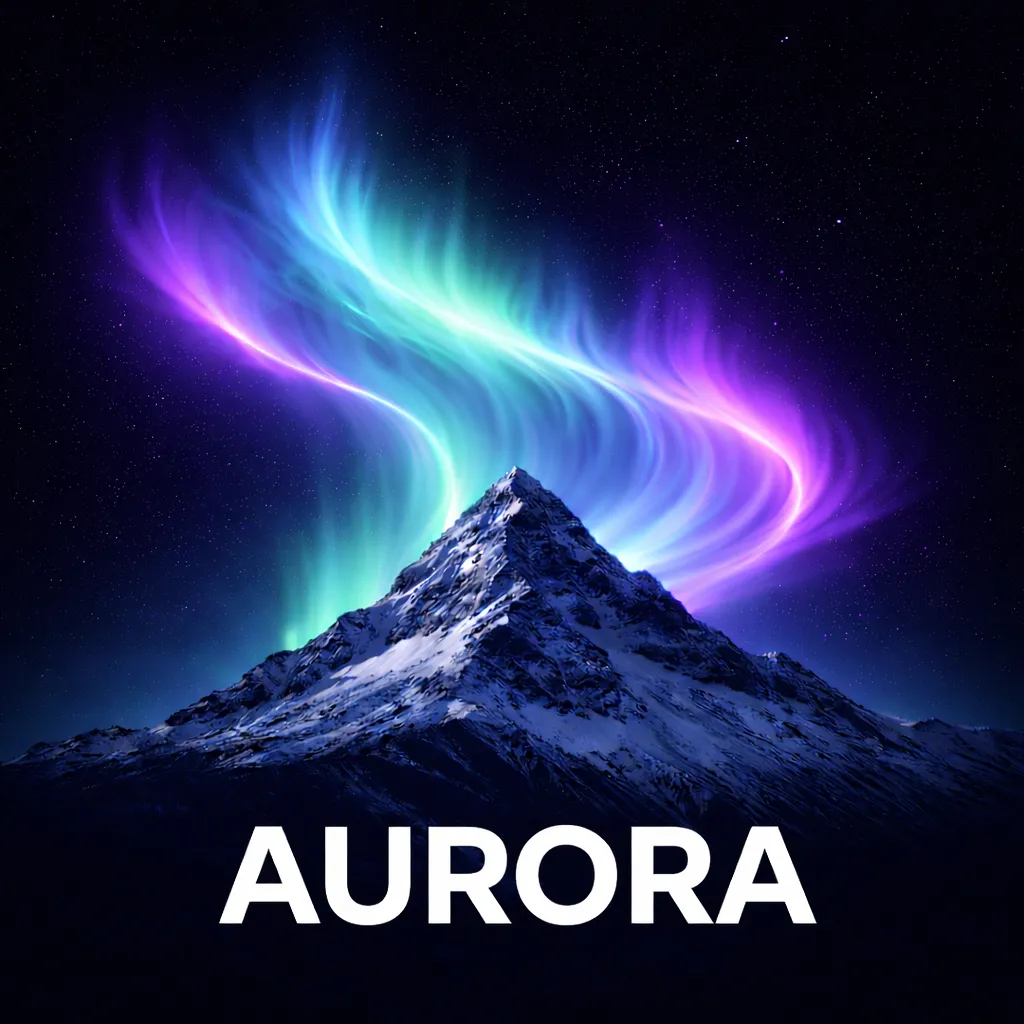
Antarctica is the true home of the Aurora Australis, but not in the travel-brochure sense. The continent sits under the southern auroral oval, offers months of winter darkness and hosts instruments that help scientists understand space weather. For most people it is not a practical viewing destination; it is the scientific end of the aurora story.
How We Reviewed This Guide
- This is an educational science guide, not a consumer travel recommendation for winter Antarctica.
- The article distinguishes between scientific aurora access and practical Southern Lights travel options for ordinary visitors.
- Aurora Hunt provides forecasts for populated regions; Antarctic interior forecasting is outside normal consumer trip planning.
Primary Sources
- United States Antarctic Program — Information on US Antarctic research stations and logistics.
- IceCube Neutrino Observatory — Background on astrophysics research at the South Pole.
- NOAA Space Weather Prediction Center — Global aurora and geomagnetic storm context.
Editorial Note
This is an educational guide. Aurora Hunt provides forecasts for populated regions, but does not position Antarctica as a normal consumer aurora destination.
Local decision check before you chase
Treat every aurora guide as a decision workflow, not as a promise that the lights will appear. Start with the geomagnetic signal, then check whether the active window overlaps true darkness, then decide if cloud cover, moonlight, terrain and safety make the trip worthwhile from your exact location.
For high-latitude destinations a modest Kp can be useful when the sky is dark and clear. For mid-latitude and low-latitude markets, the same number can be meaningless unless Bz stays southward, the storm arrives during local night and the northern or southern horizon is unobstructed. This is why Aurora Hunt pages separate routine aurora regions, rare storm-visible regions and southern-light locations.
After any observation, compare the time, viewing direction, camera settings and local weather with magnetometer and solar-wind data. That habit prevents common false positives: city glow, thin cloud, airglow, lens colour shifts and social-media reports that were recorded hundreds of kilometres away.
- Kp and short-term trend
- Bz direction and solar-wind speed
- Cloud cover and moonlight
- Open horizon and dark-sky safety
Antarctica and the Southern Auroral Oval
Earth's auroras form in two broad rings around the magnetic poles. In the Southern Hemisphere, that oval often sits over Antarctica, the Southern Ocean and nearby high-latitude regions. During quiet geomagnetic conditions, the Aurora Australis may be essentially an Antarctic event, invisible from populated southern landmasses.
This makes Antarctica scientifically ideal. Researchers can observe aurora close to its natural southern home rather than from the edge. They can measure particle precipitation, magnetic disturbances, upper-atmosphere emissions and connections to solar-wind changes with instruments placed in some of the cleanest observing environments on Earth.
It also means Antarctica should not be sold casually as a tourist aurora destination. The best aurora season there is the worst tourism season: dark, cold, isolated and logistically restricted.
The difference between scientific ideal and travel reality is the main point of this guide. Antarctica is where the Southern Lights can be studied with exceptional geometry, but that does not make it the right recommendation for a reader searching for a trip. The honest answer is that Antarctica explains the phenomenon; Tasmania, New Zealand and Patagonia are where most people can responsibly try to see it.
Winter Darkness and Dayside Aurora
At the South Pole, the Sun sets around March and rises again around September. This creates months of continuous darkness. For aurora science, that is extraordinary. Displays that would be invisible in daylight at other locations can be observed optically because the station remains dark.
The polar night also allows long, uninterrupted monitoring. Instruments can watch the sky through whole geomagnetic events rather than only through a local night window. That is useful for studying how auroral forms evolve, how substorms brighten and how energy moves through the magnetosphere.
For humans, the same conditions are severe. Winter-over personnel live with extreme cold, isolation, limited evacuation options and carefully managed operations. The aurora may be spectacular, but it is part of a demanding research environment, not a normal night tour.
Continuous darkness also changes what "forecasting" means. At ordinary latitudes, a storm can be missed because it peaks in daylight. In Antarctic winter, the optical observing window is much longer, so scientists can connect the full evolution of a storm to satellite and ground measurements. That is one reason polar stations are valuable for understanding more than pretty sky color.
Because Antarctic winter can stay dark through the local day, scientists can observe auroral activity that would be hidden by daylight at most inhabited latitudes.
Research Stations and Instruments
Antarctic research stations support space-weather science in different ways. The Amundsen-Scott South Pole Station sits at the geographic South Pole and is important for atmospheric, astrophysical and geospace research. McMurdo Station supports broader logistics and science. Halley, Concordia and other international stations contribute to atmospheric and magnetospheric observations.
Aurora science is not only someone looking up at green light. Stations may operate all-sky cameras, magnetometers, riometers, GPS receivers and atmospheric instruments. These tools help researchers connect what happens in the sky with what satellites and ground sensors measure during geomagnetic storms.
The Antarctic environment is valuable because it is remote from many sources of human light pollution and radio noise. It is also harsh on equipment. Instruments must survive cold, wind, ice accumulation and long periods without easy maintenance.
Those stations also produce context for the forecasts normal chasers use. Magnetometers help describe geomagnetic disturbance. All-sky imagers show auroral structure. Atmospheric instruments help researchers study how energy enters the upper atmosphere. A phone alert in Tasmania or Michigan is downstream of a much larger observing network, and polar stations are part of that network.
Conjugate Auroras and Magnetic Field Lines
Earth's magnetic field connects northern and southern regions. In some conditions, an aurora in one hemisphere has a related counterpart in the other, called a conjugate aurora. These paired observations help scientists understand how particles move along magnetic field lines and how symmetrical or asymmetrical the magnetosphere becomes during storms.
Perfect symmetry is not guaranteed. The interplanetary magnetic field, seasonal illumination, conductivity differences and magnetic geometry can make the two hemispheres behave differently. That is one reason simultaneous north-south observations are scientifically valuable.
For a non-scientist, conjugate auroras are a useful reminder that the aurora is a planetary system, not a local weather effect. The same solar-wind stream can energize both ends of a magnetic field line while local observers experience very different skies, seasons and weather. Antarctica helps reveal the system-level behavior.
At the South Pole the Sun sets in March and does not rise again until September, giving researchers long darkness windows unavailable to normal tourism.
Auroral activity in one hemisphere can have a related counterpart in the other because magnetic field lines connect northern and southern regions.
Winter access is limited to research and station personnel. Most tourist travel happens during bright summer, when aurora viewing is not practical.
IceCube and Antarctic Astrophysics
The IceCube Neutrino Observatory is not an aurora camera. It is a deep-ice detector designed to observe neutrinos from cosmic sources. But it illustrates why Antarctica matters to space and atmospheric science: the continent gives researchers a stable, cold, dark and uniquely isolated platform for experiments that cannot be done easily elsewhere.
Aurora, cosmic rays, atmospheric chemistry, upper-atmosphere emissions and astrophysics all intersect in the Antarctic research ecosystem. The Southern Lights are part of a larger scientific picture: Earth is constantly interacting with space.
That broader picture matters for practical forecasting too. Space weather can affect satellites, radio communication, navigation and power infrastructure. The aurora is the visible part of a wider geophysical event. Antarctic research helps connect the beautiful visual display with the invisible systems modern society depends on.
Why Tourists Usually Cannot See It There
Most Antarctic tourism happens during southern summer, roughly November to March. That is when ships can operate more safely, daylight is abundant and wildlife viewing is possible. It is also the wrong season for aurora because the sky is too bright.
Winter is the aurora season, but winter access is restricted. Sea ice expands, temperatures can plunge far below what normal visitors can handle and emergency logistics become extremely difficult. Only essential station personnel remain at many sites. A tourist cannot simply book a winter aurora cruise to the South Pole.
This is why claims about "seeing the Southern Lights in Antarctica" need careful framing. Scientifically, Antarctica is the best place. Practically, it is not the right recommendation for ordinary aurora travelers.
Even summer visitors to Antarctica should be cautious about expectations. Long daylight, weather, itinerary constraints and ship schedules mean aurora viewing is not the purpose of most trips. If someone sees a faint display near the edge of the season, it is a bonus, not a reliable product.
| Question | Antarctic reality | Traveler takeaway |
|---|---|---|
| Is the geometry excellent? | Yes. The continent sits close to the southern auroral oval during many events. | Excellent science access does not equal realistic public access. |
| Is the best season bookable? | No for ordinary visitors. Winter darkness is mostly a research-station environment. | Plan accessible Southern Lights trips around Tasmania, New Zealand or Patagonia instead. |
| Can summer cruises work? | Usually not for aurora. Long daylight and itinerary priorities work against visibility. | Treat any edge-season sighting as a bonus, not the reason to book the trip. |
What Travelers Can Do Instead
If your goal is to experience the Aurora Australis, focus on accessible southern locations: Tasmania, southern New Zealand, Stewart Island and parts of Patagonia. They are farther from the oval than Antarctica, but they offer roads, accommodation, local weather data and realistic travel windows.
Use Antarctica as context. It explains why the Southern Lights exist, why they are harder to access than northern displays and why southern forecasts need careful horizon interpretation. The practical chase belongs to the edges of the Southern Ocean; the scientific heart belongs to the ice.
That framing also avoids overclaiming. A reader should leave this article understanding why Antarctica is special without thinking they can book a normal winter aurora package there. The release-ready answer is both inspiring and careful: the best scientific seat is on the ice, but the best traveler path is a dark southern coast with safe access.
For normal travelers, Tasmania, New Zealand and Patagonia are the realistic Southern Lights choices. Antarctica is primarily a research context unless you are part of a scientific program.
About the Author
AuroraHunt Space Weather Team
The AuroraHunt data science and meteorology team translates complex NOAA space weather models into actionable forecasts for chasers worldwide.